Salary based
The maximum number of vacation days per year is 18.

With the Salary-based accrual method, we disregard historical compensation accruals and calculate the vacation compensation amount solely based on the salary in the month the vacation is used.
FIFO
The maximum number of vacation days per year is 18.

With the FIFO method, we take the historically accrued (earned) vacation compensation amount starting from the beginning of the period.
Warning
If you use the FIFO method and allow employees to go into a negative vacation balance, negative payout amounts may appear in future periods.
This can happen because the vacation was paid in advance in a period with one day rate, while the actual accrual of those days happened later — at a different day rate.
The system automatically recalculates these situations and gradually balances out both the day count and the monetary amount.
Important when using FIFO with a negative balance allowed
Important when using FIFO with a negative balance allowed
If your company uses the FIFO accrual method for vacation with the option for an employee to go into a negative balance — meaning they can take vacation in advance / on credit — you need to take into account certain specifics of the monetary balance calculation.
How FIFO works
With the FIFO method, the system deducts vacation days in the order they were accrued: the oldest accrued days are used first, followed by more recent accruals.
If at the time the vacation is used the employee doesn't have enough accrued days, but the policy allows a negative balance, the system allows the vacation to be used in advance.
In this case, the employee's day balance goes negative.
What happens when an employee takes vacation in advance
If an employee takes vacation in a period where there aren't yet enough accrued days, the system calculates the payout for those days based on the current data at the time of use:
• salary
• FTE
• calendar
• number of working days in the month
• active vacation policy
In other words, the system effectively pays out the vacation in advance, before those days have actually been earned by the employee.
Why a negative amount may appear later
Why a negative amount may appear later
In the following months, the employee continues to accrue vacation days. These new accruals are automatically used by the system to close out the previous negative balance.
However, it's important to note: the cost of one vacation day can vary from month to month.
For example:
in a month with fewer working days, one vacation day costs more;
in a month with more working days, one day may cost less.
So a situation can arise where the vacation was paid out in advance at one day rate, while the days actually accrued later have a different monetary value.
In such cases, the system performs a recalculation and balances things out. This is exactly why a negative payout amount or a negative value in monetary usage may appear in certain periods.
This is not a calculation error
A negative amount in this case does not mean the vacation was accrued incorrectly.
It means the system:
• accounts for vacation taken in advance;
• compares it against the amount already paid out;
• closes the negative balance with future accruals;
• balances out the difference between day rates across different periods.
This behavior is expected for policies that allow taking vacation in advance.
LIFO
The maximum number of vacation days per year is 18.

With the LIFO method, we take the historically accrued (earned) vacation compensation amount starting from the end of the period (i.e., from the current month).
Avarage
The maximum number of vacation days per year is 18.
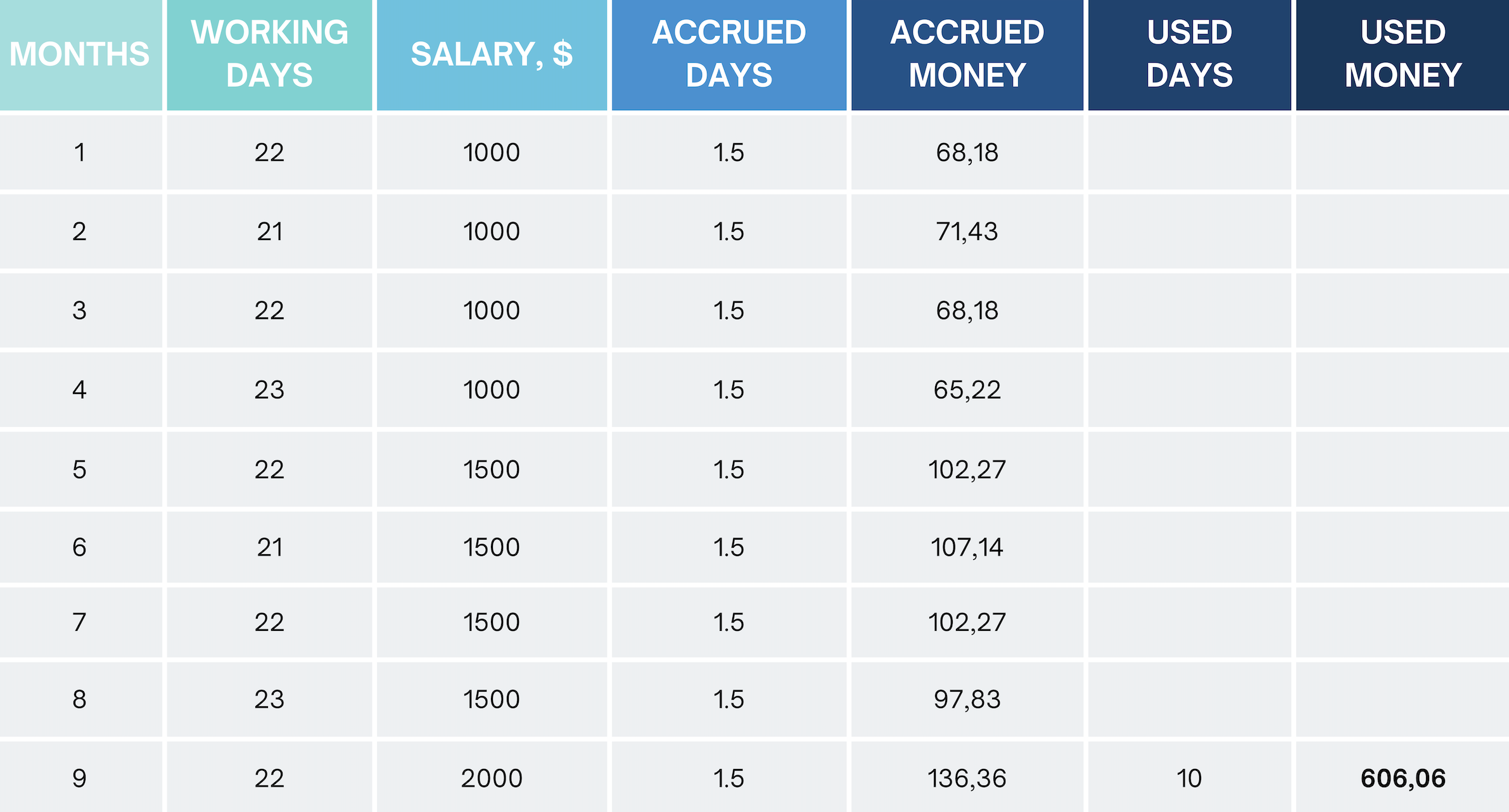
With the Average method, we calculate the average daily salary over the period and multiply it by the number of days used.
Example of transitioning from FIFO policy to FIFO policy
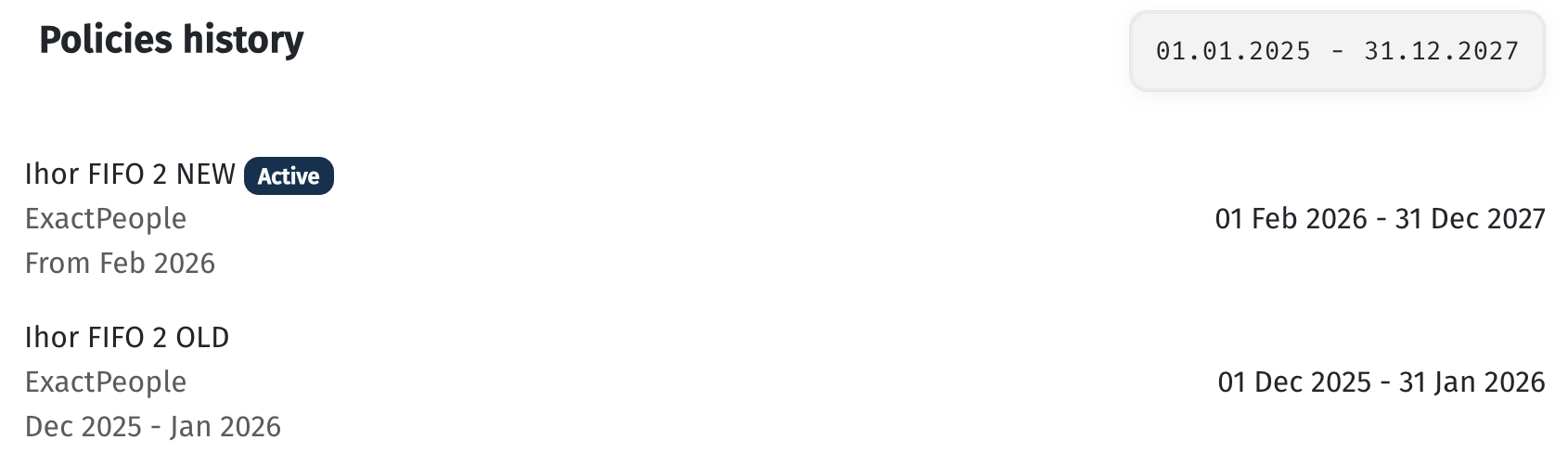
Let's consider the following scenario: The employee has been employed since December 1, 2025. Two policies apply to them:
• OLD — December 2025 – January 2026 (salary $1,000);
• NEW — from February 2026 (salary $2,000).
Vacation accrual is 1.33 days per month.
How deduction works (FIFO)
The system uses the FIFO (first in, first out) principle — the oldest accrued days are deducted first.
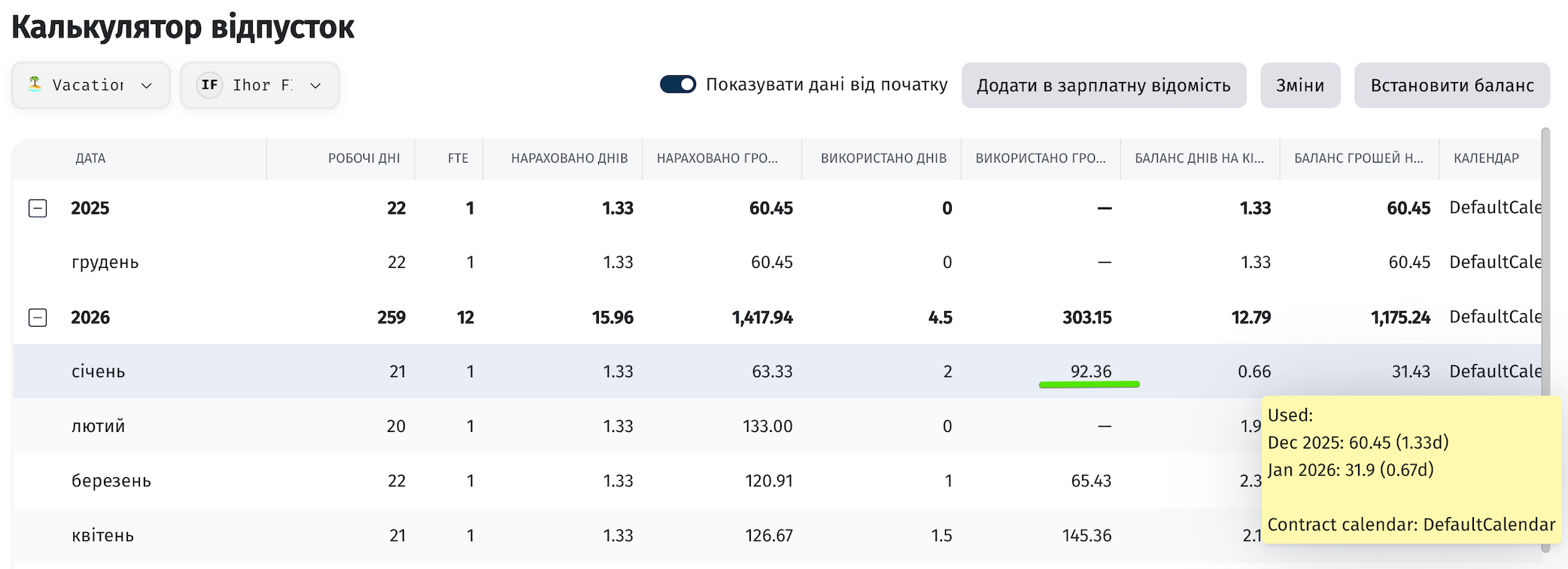
January 2026 - 2 days used
Deduction happens from the oldest available periods:
• Days for December 2025 fully used (1.33 days)
• Days for January 2026 partially used (0.67 days)
Calculation:
• December 2025: 1.33 days × $45.45 = $60.45
• January 2026: 0.67 days × $47.62 = $31.91
Total: $92.36
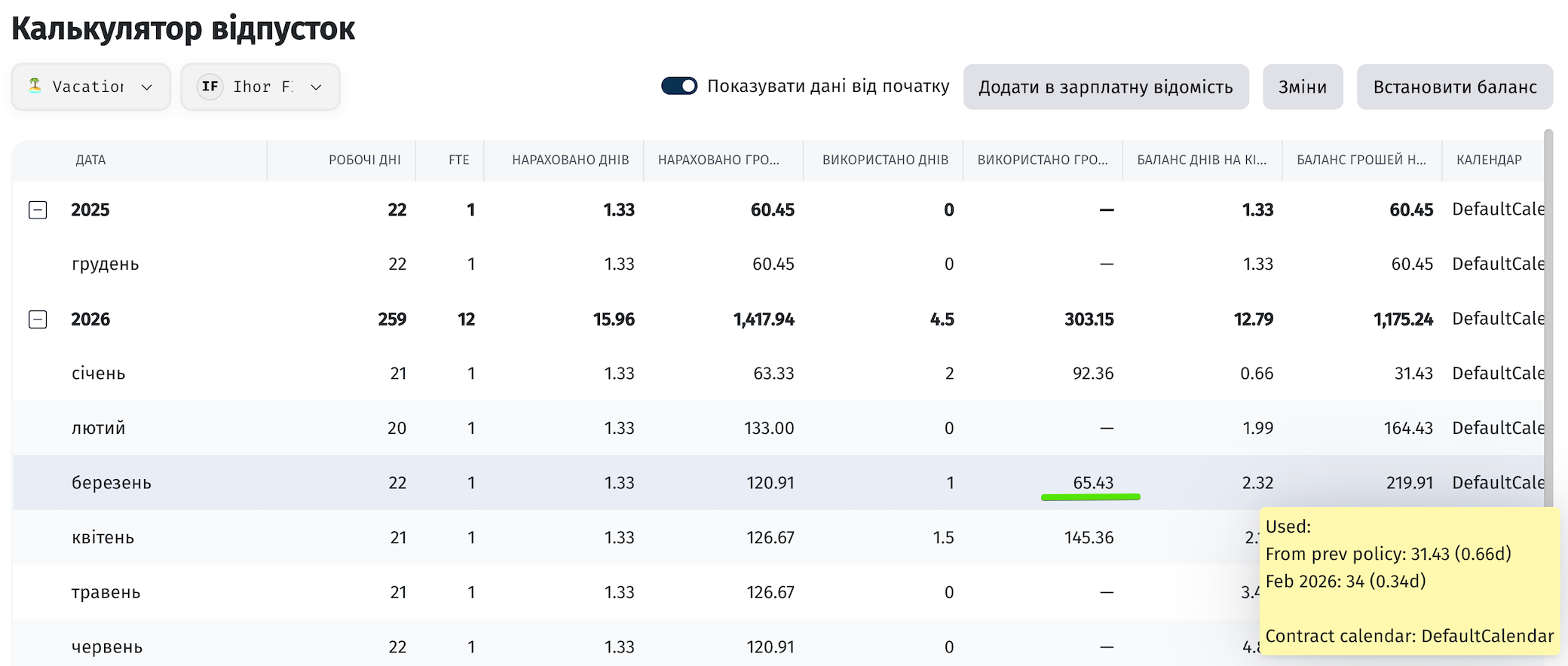
March 2026 - 1 day used
After the previous deduction, a balance remains from January, which is used first:
• Remaining balance from January 2026: 0.66 days
• February 2026 partially used: 0.34 days
Calculation:
• January 2026: 0.66 days × $47.62 = $31.43
• February 2026: 0.34 days × $100.00 = $34.00
Total: $65.43
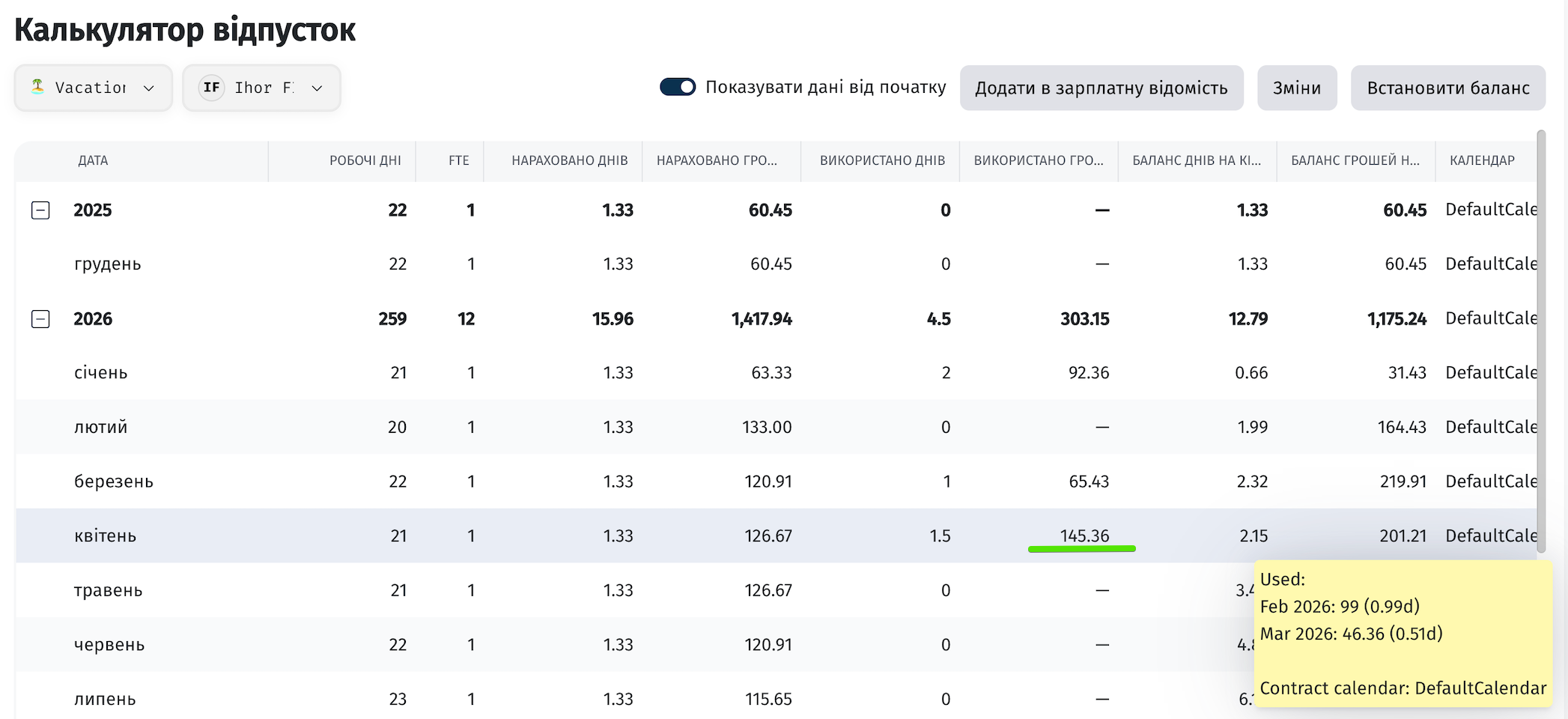
April 2026 - 1.5 days used
Deduction then continues from February:
• Remaining balance from February 2026: 0.99 days
• March 2026 partially used: 0.51 days
Calculation:
• February 2026: 0.99 days × $100.00 = $99.00
• March 2026: 0.51 days × $90.91 = $46.36
Total: $145.36
Important considerations
Days are always deducted in chronological order (from oldest to newest).
The cost of a day is determined by the rate that was in effect in the month it was accrued.
A change in policy or salary does not affect days already accrued — they retain their original value.
This ensures accurate and transparent vacation calculation across all scenarios.