How to add billing information to a client’s invoice?
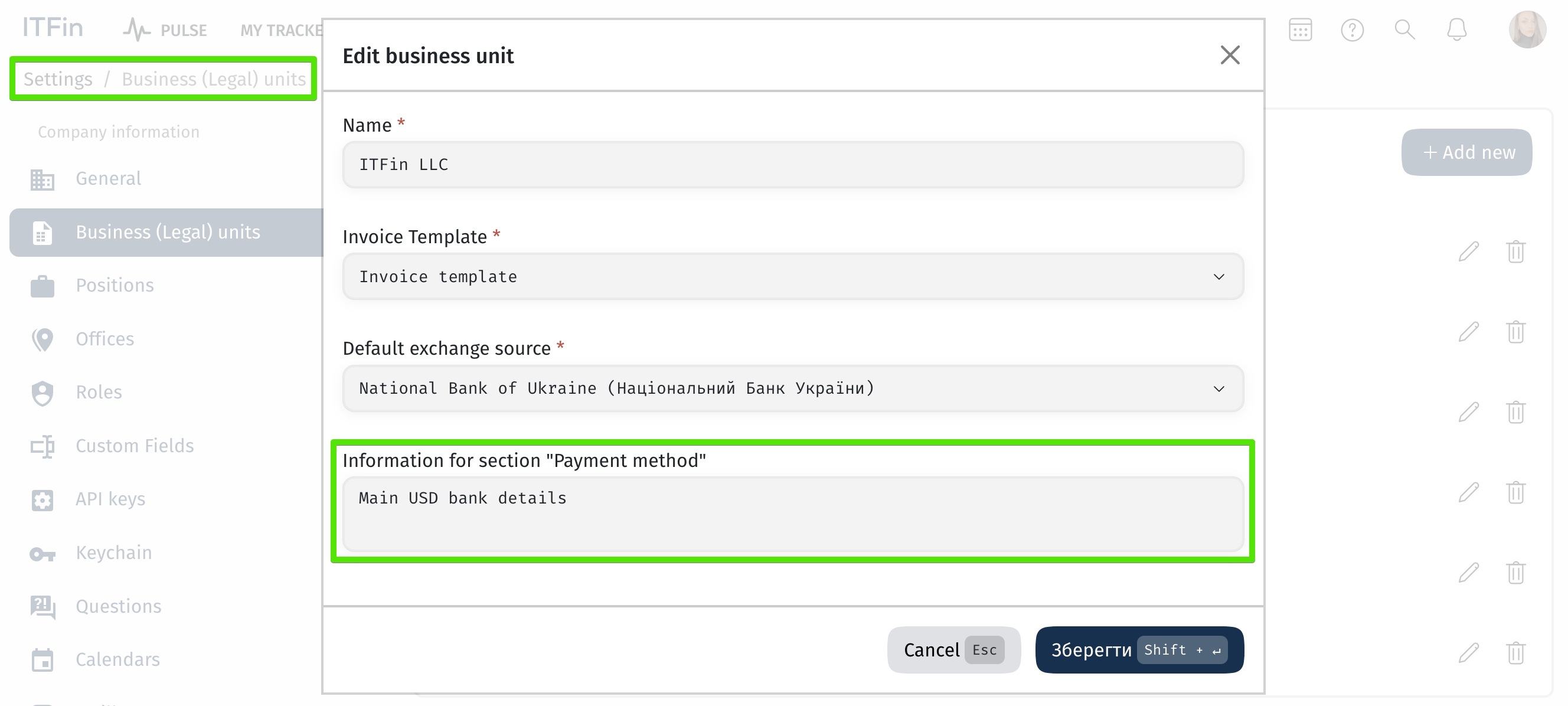
The main company details are in the Settings > Business Units section, in the field Information for section "Payment method".
Next, you need to add payment details for each currency separately in the client’s card. If the details differ, you should enter them in the Information for section “Payment Method” field in the Billing information block.
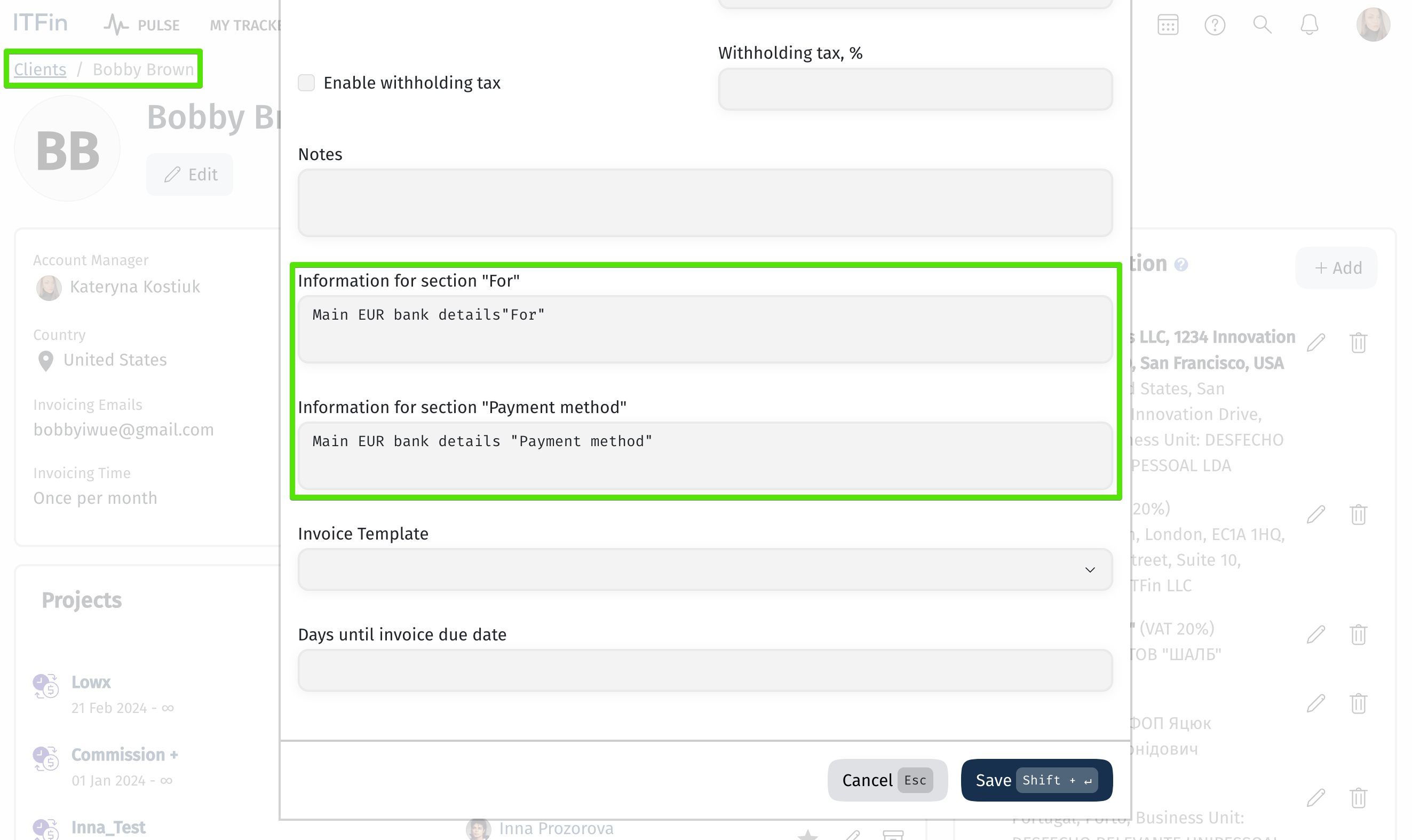
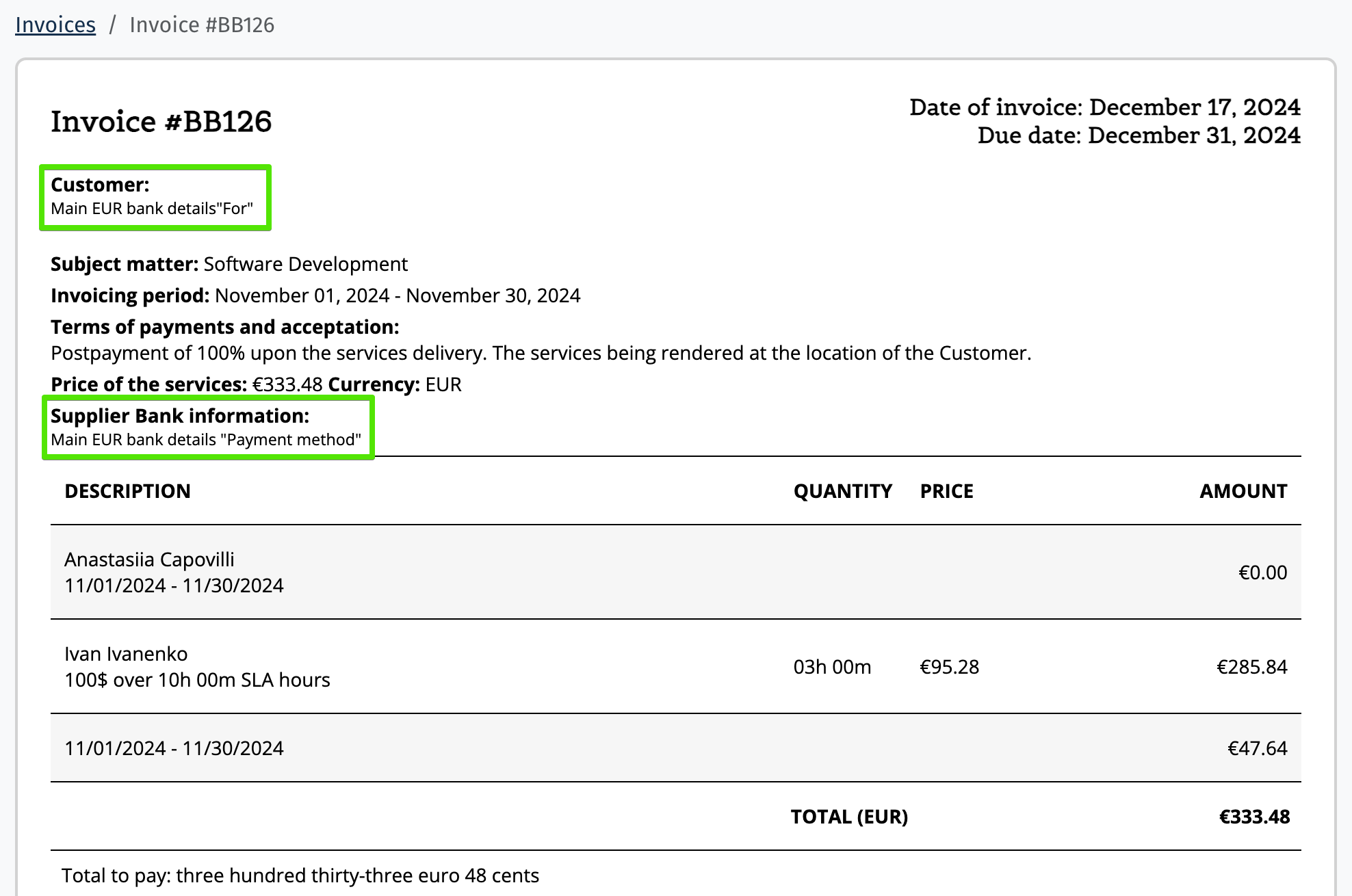
Each currency can have separate payment details. Later, after selecting the invoice currency, the system will automatically pull the corresponding details from the Information for section “Payment Method” field.
How to add a custom field to an invoice?
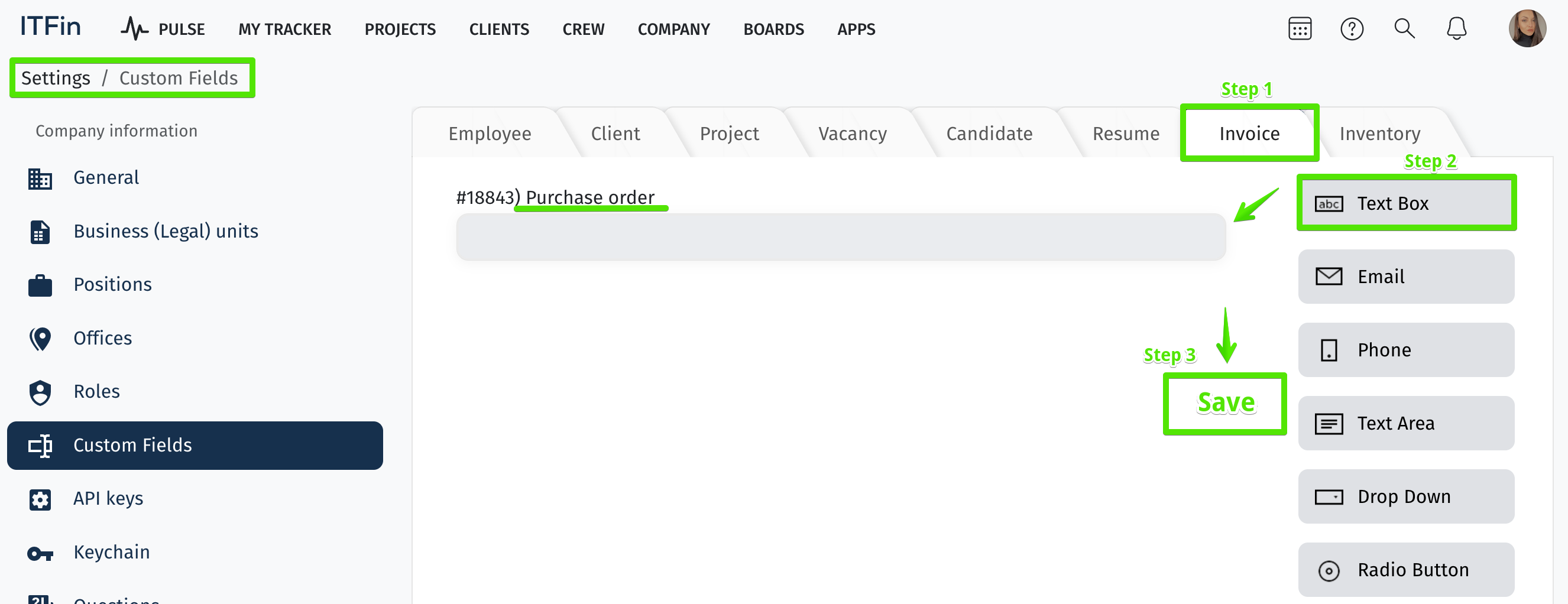
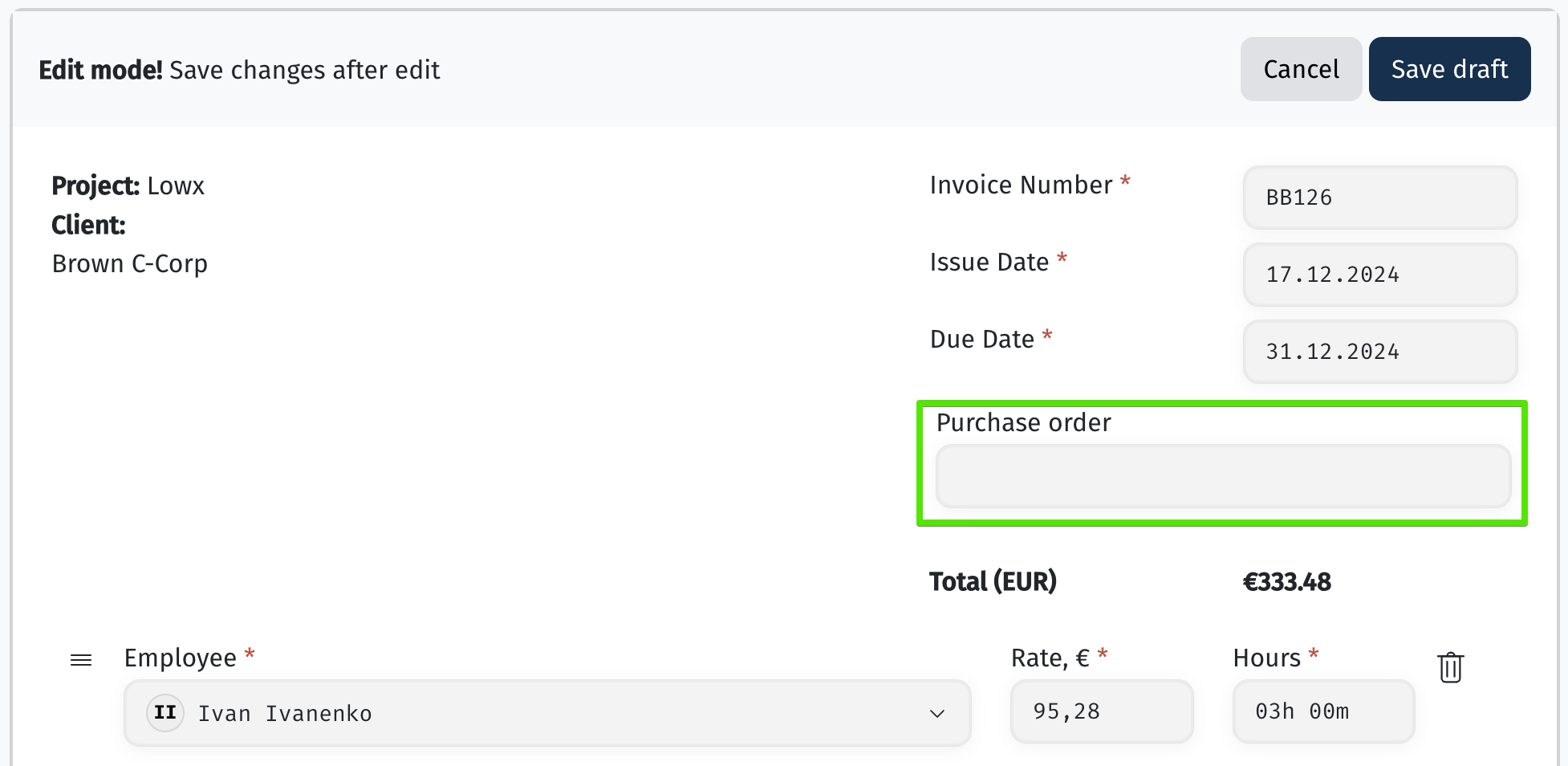
To do this, you need to go to Settings > Custom Fields and select the Invoices tab. Create a custom field and click Save. After this, an ID will be created for the field, and it will be added to the invoice modal window.
And then we create an invoice. In this example, you can see that we added a new field, Purchase order.
What if the payment currency doesn't match the invoice currency?
What if the payment currency doesn't match the invoice currency?
Technically, for this case to be recorded correctly in the system, the following events need to happen:
We have the first and last events — the invoice itself in $ and the payment in €. For the amounts to be correctly distributed between accounts and for the balance to close, technical transactions need to be added to the system.
Let's break down the situation step by step:
Step 1.
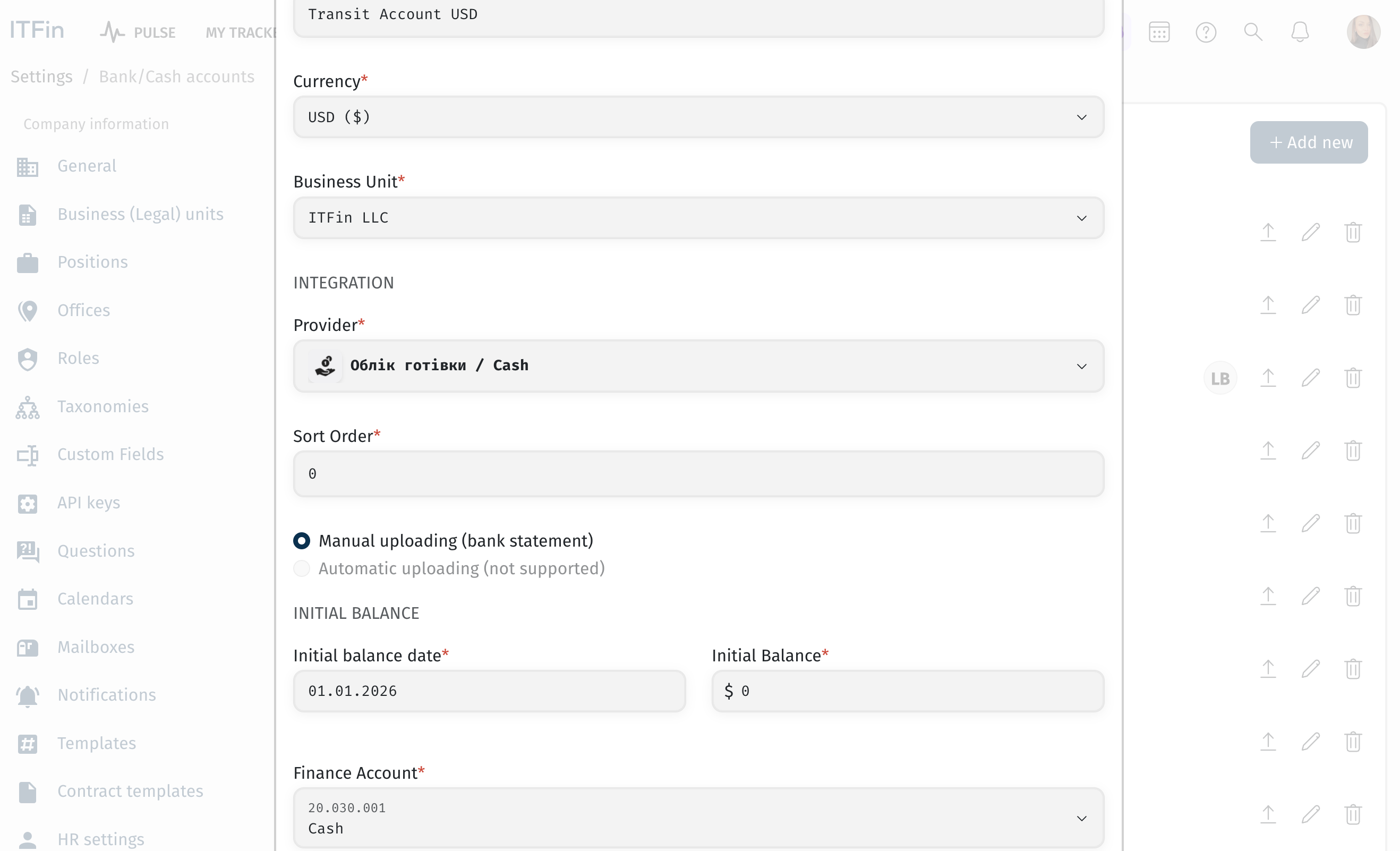
Create a technical account for transiting funds in the currency we need. In this case, to end up with euros on our accounts, we need to sell $. So for this example, we create a transit account in dollars via Company > Settings > Bank/Cash accounts.
Step 2.
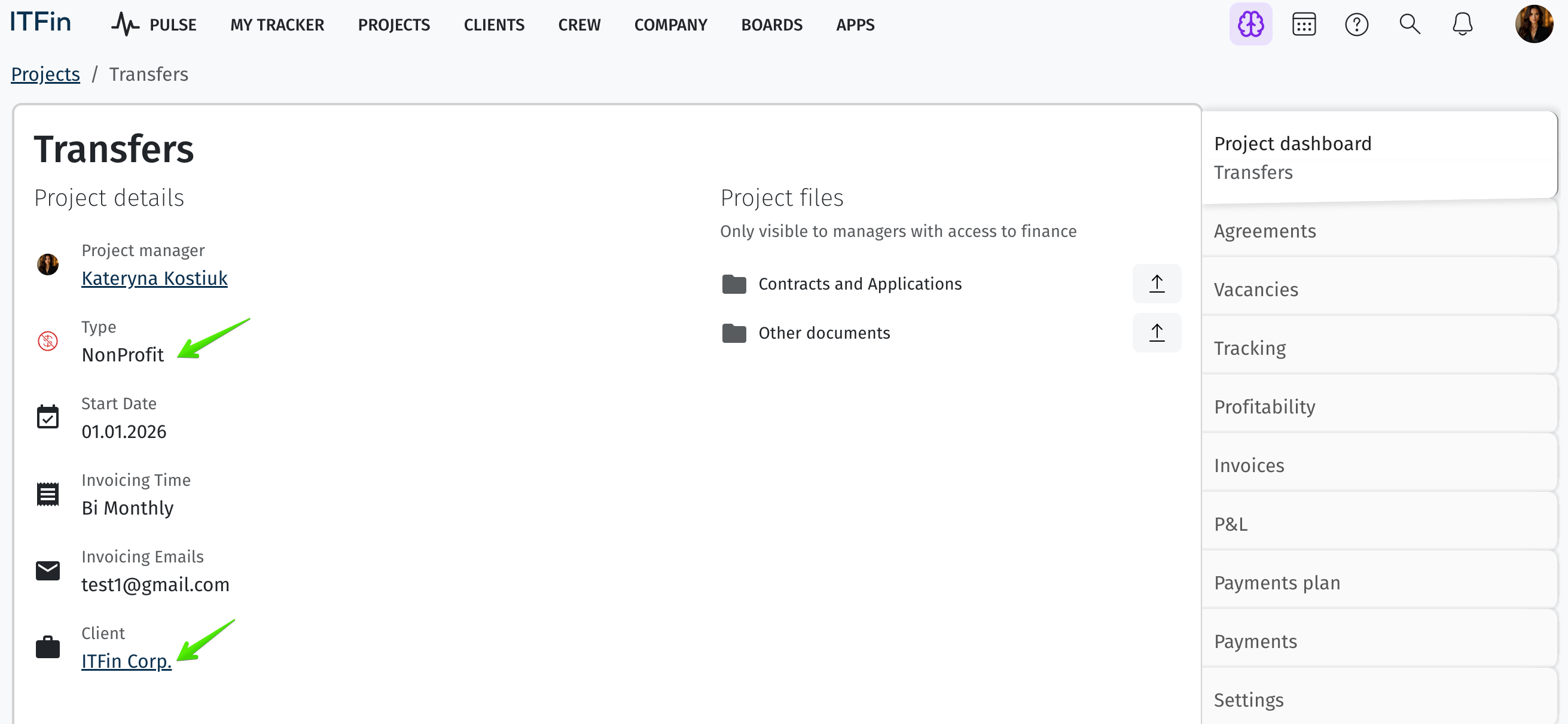
For operations of this type, it's a good practice to create a separate internal (non-profit) project called Transfer, and set up your own company as a client. In our example, we created the company ITFin Corp. as a client.
Step 3.
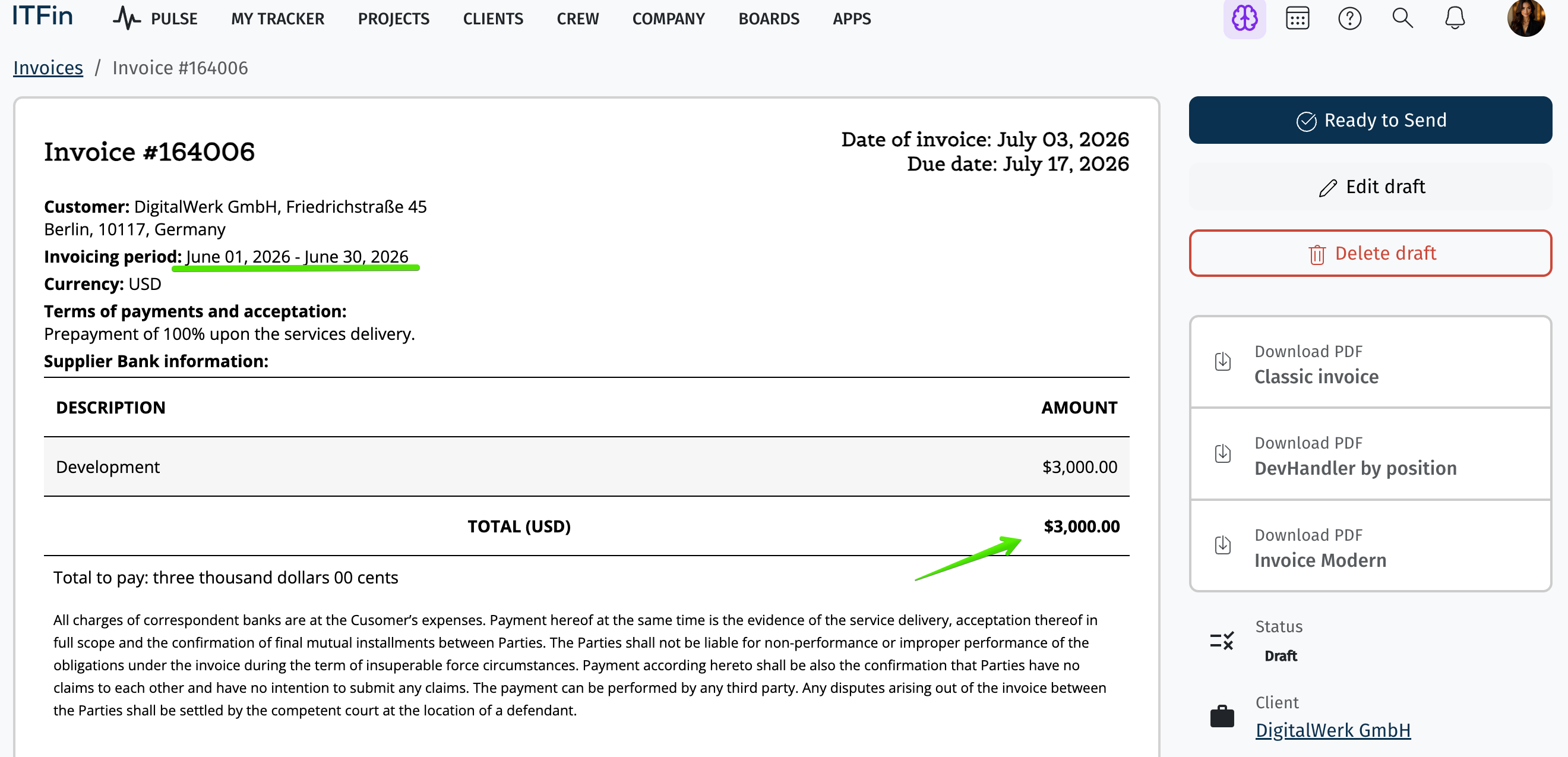
A client invoice for $3,000 was created in the system, and the payment for this invoice was received from the client in euros.
Step 4.
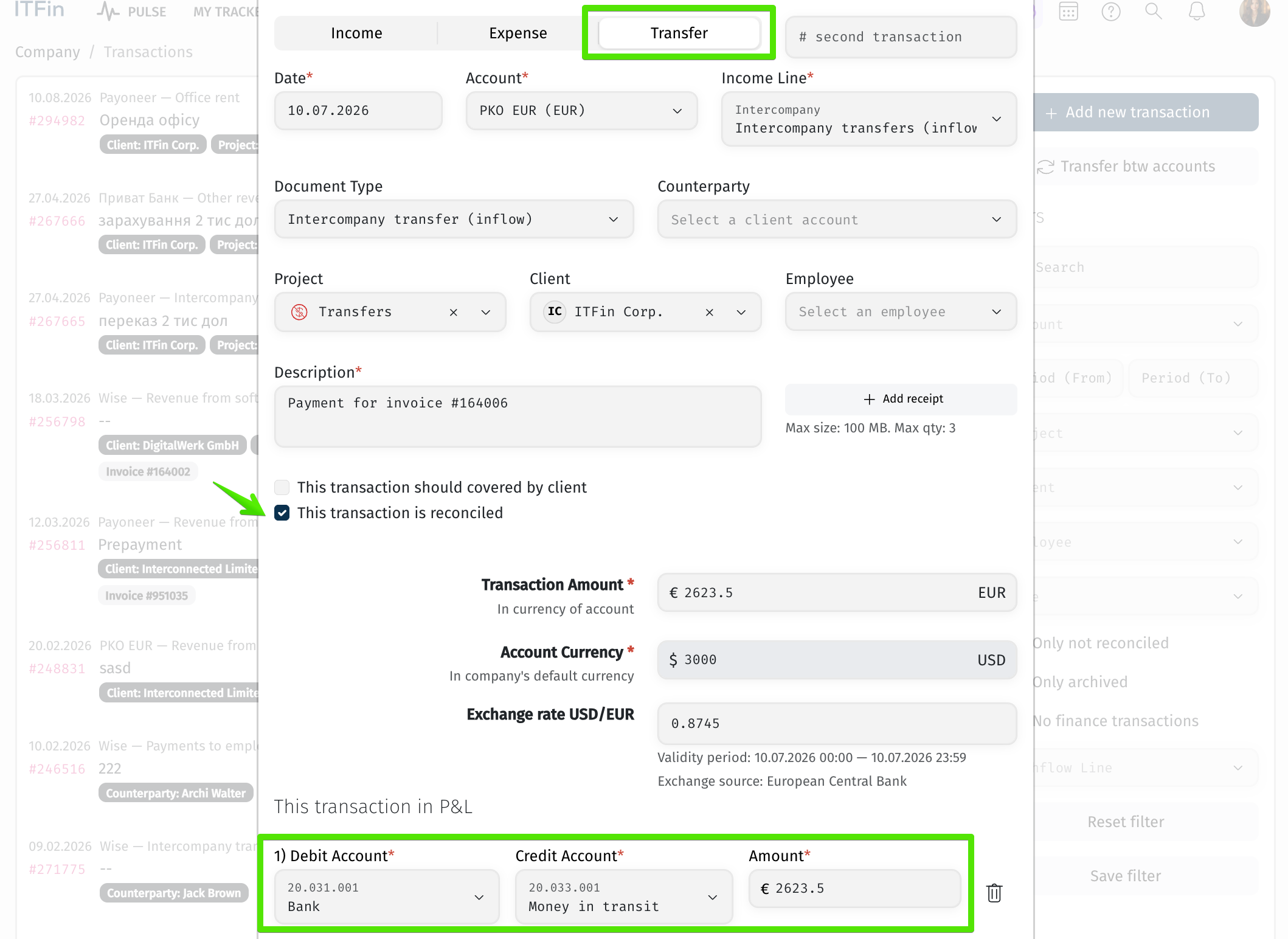
Upload a bank statement into the system with the actual receipt of funds from the client in a different currency, euros. In this case, the actual receipt of funds will be recorded in the system not as closing the receivable, but as income from the sale of currency.
When recording this receipt, we need to specify:
• Transaction type — Transfer
• Account — select from the list the euro account the money arrived in
• Project — Transfer.
• Transaction amount — the actual amount received
• Check the "This transaction is reconciled" checkbox
Add the double entry:
Step 5.
Create the first technical posting to close the client's receivable. For accounting purposes, we treat this as if we received the money from the client in the invoice currency. Go to Company / Transactions / + Add new transactions.
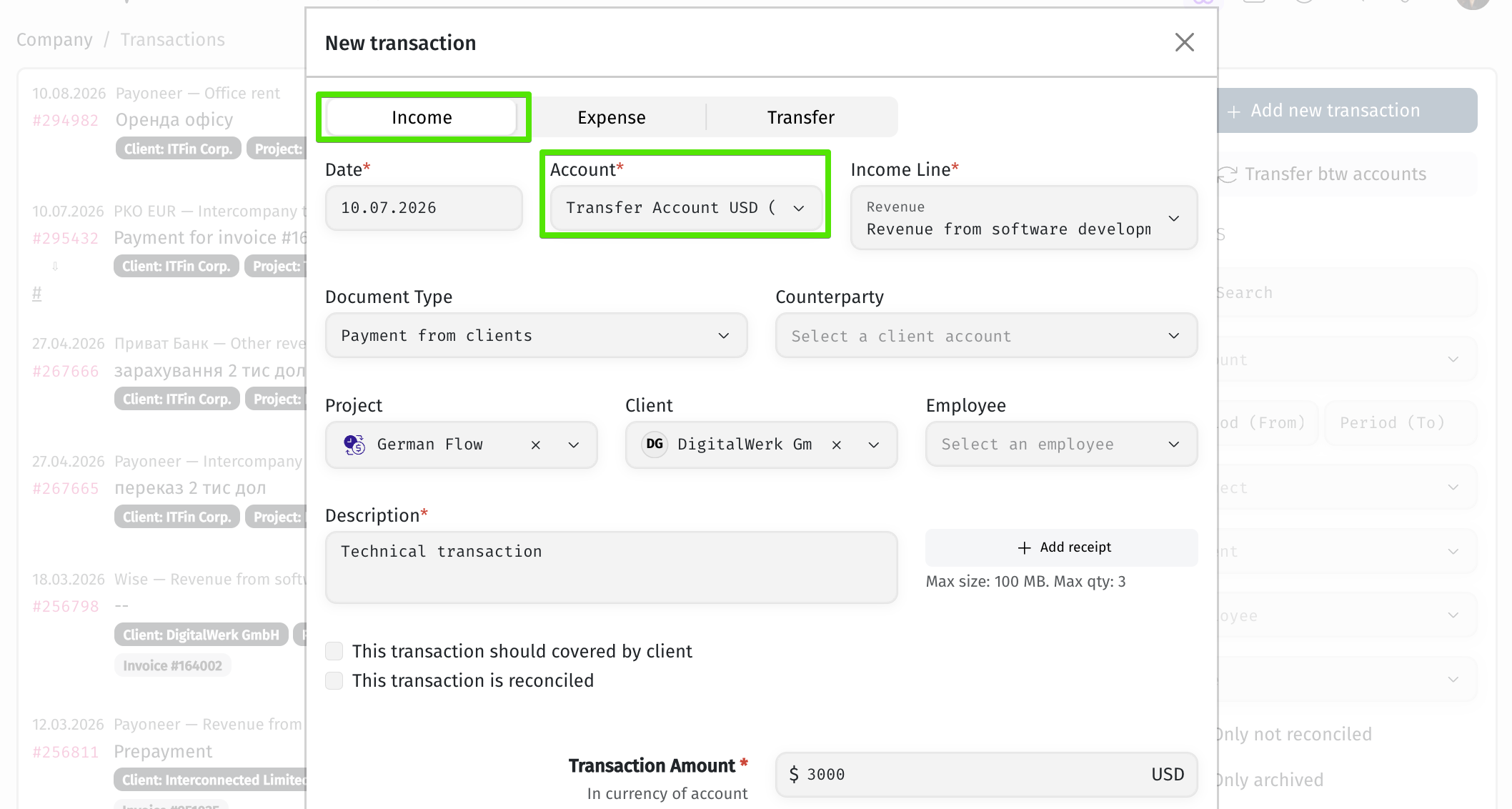
• Payment date: 10.07.26.
• Account: the USD transit account.
• The amount and currency of the payment must match the invoice.
• In the description field, add a note for yourself, e.g., the invoice number.
Step 6.
The technical payment needs to be reconciled.
Go to Company / Reconciliation.
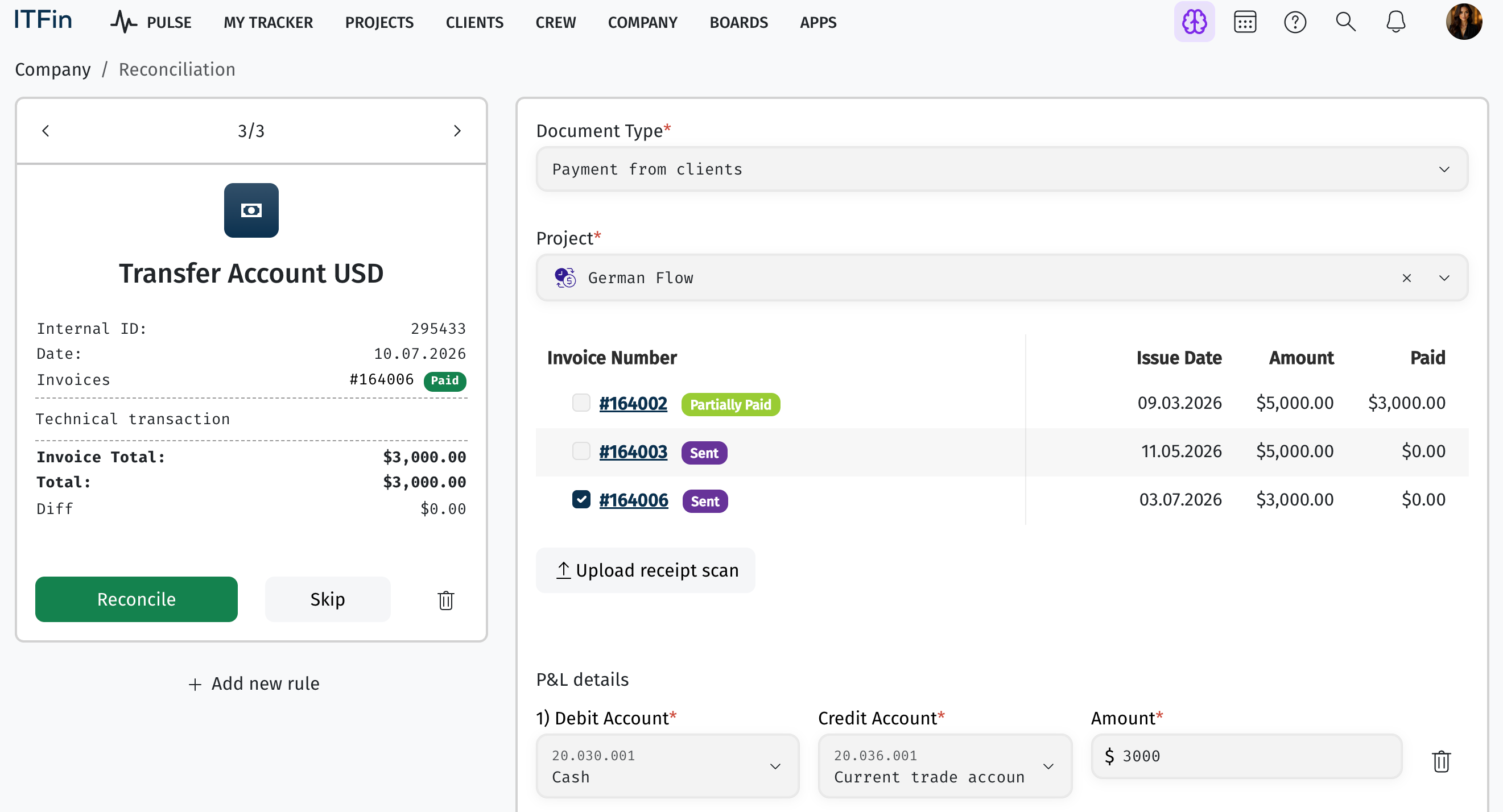
After the payment is reconciled, the posting will be pulled into the transaction:
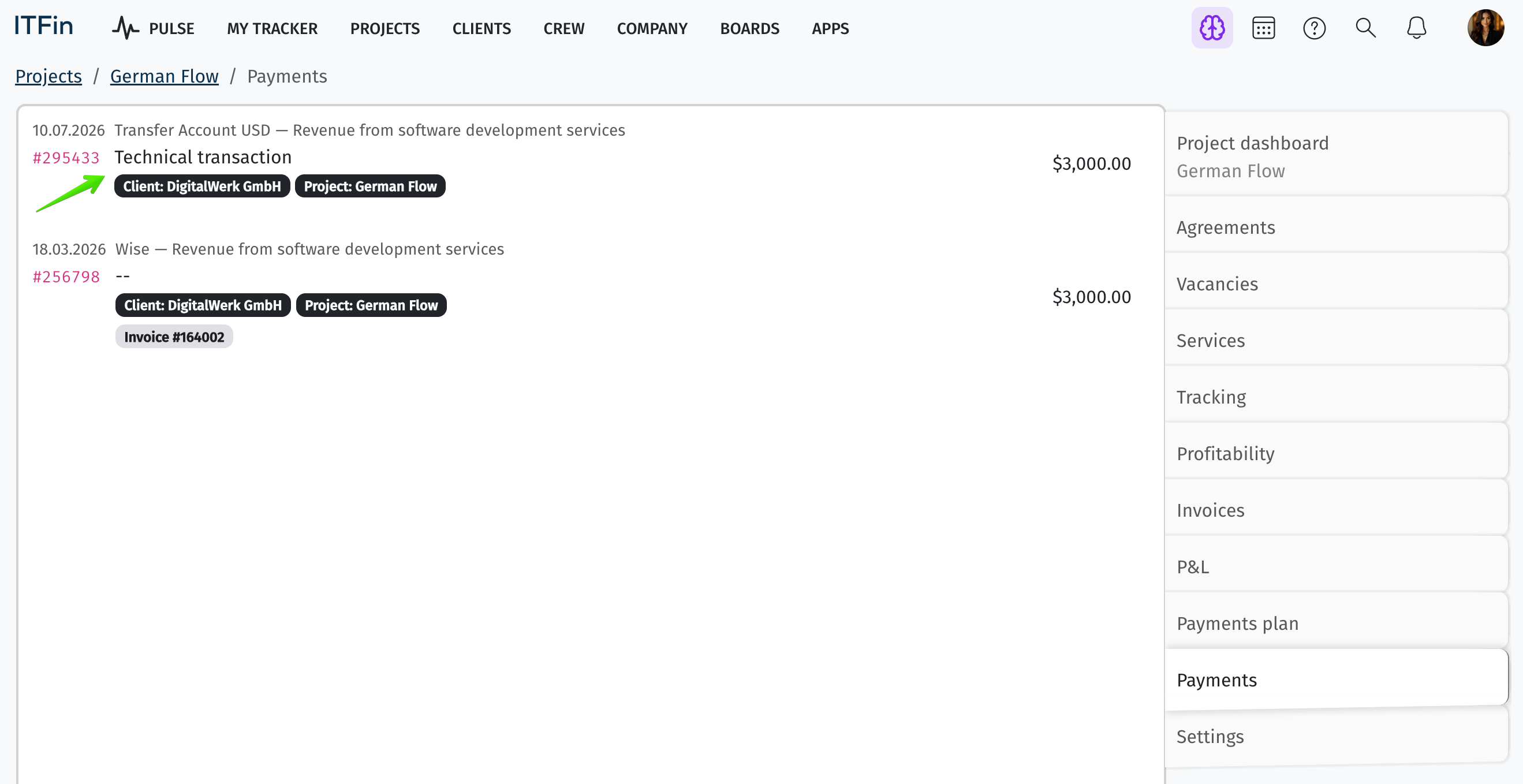
Once reconciled, the transaction will also appear in the project under the Payments tab.
Step 7.
Next, create the second transit operation.
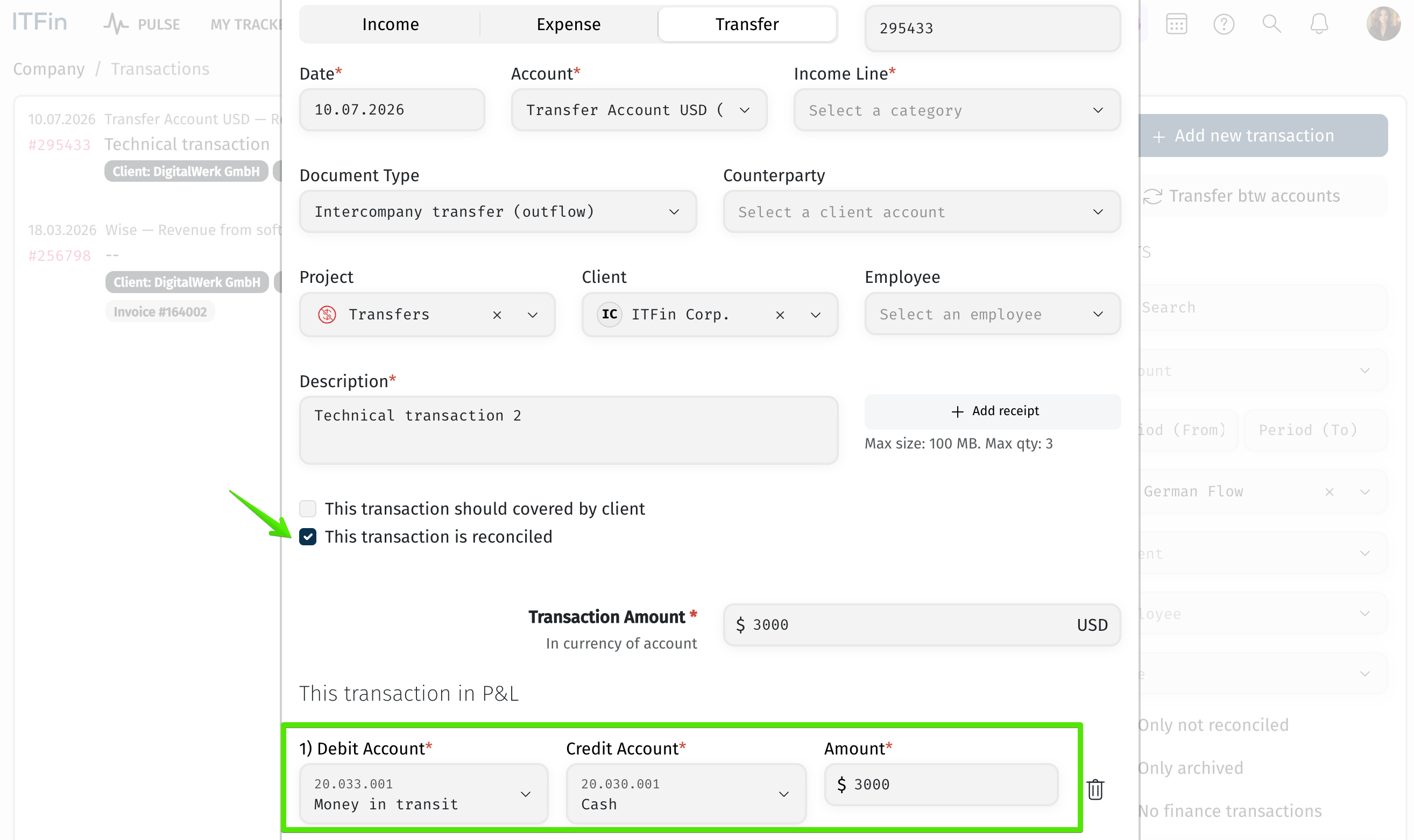
The purpose of this transaction is to move the $ from the cash account to the Money in transit account. Go to Company / Transactions / + Add new transactions. Check the "This transaction is reconciled" checkbox.
Add the double entry:
Step 8.
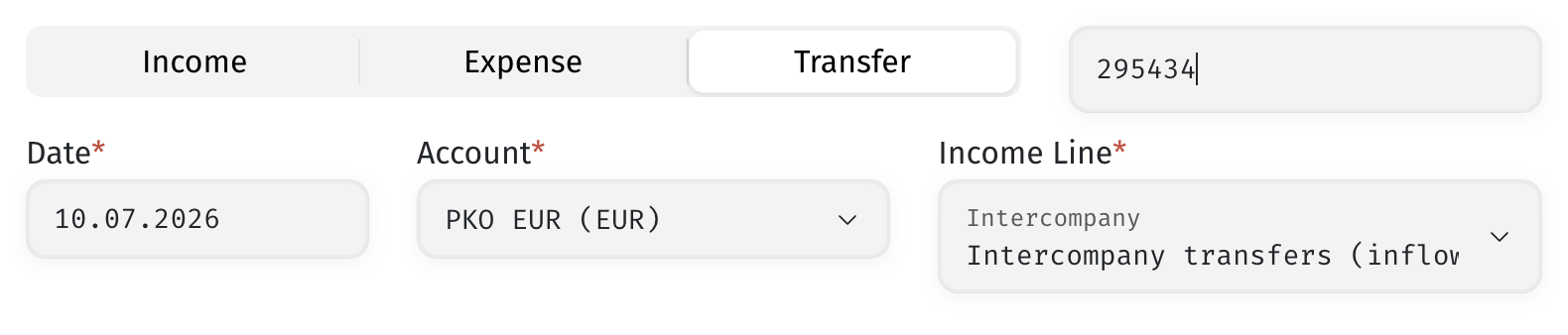
Go back to the transaction where we received the euros — i.e., the actual payment from the client — and link the two currency exchange operations together. To do this, add the ID of the second technical transaction in the top-right field. This way the system will correctly calculate the currency difference between these transactions.
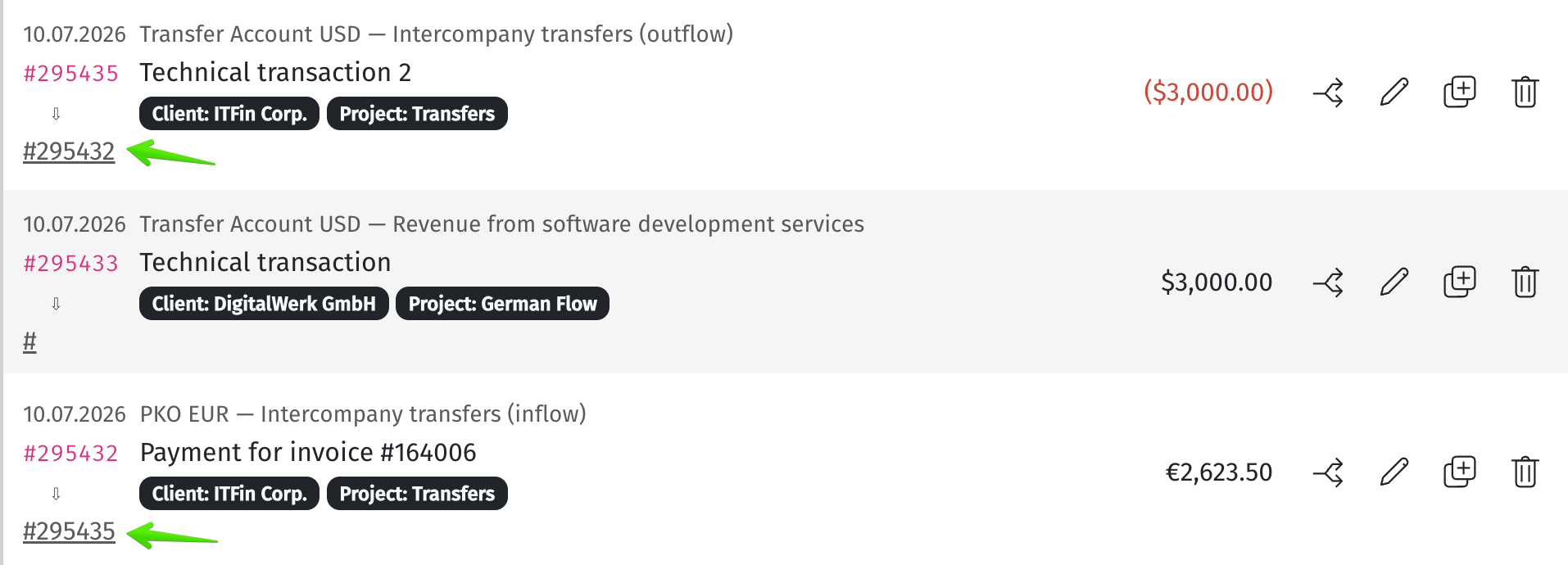
Let's verify:
If the transactions were recorded correctly, the Trial Balance report will show it. Since the invoice was issued in July and the payment arrived in July, the report needs to check in this month. In the filter, select the period: July.
To be able to drill this report down to project, client, employee, etc., the account expansion level needs to be set in the Chart of Accounts. Also, if an account is meant to accumulate a currency difference, the account must be marked as monetary.